
Indigenous people from Amazon protect the forests, being considered "Guardians of the forest" by UN in 2021.
Indigenous people from Amazon protect the forests, being considered "Guardians of the forest" by UN in 2021.
Biodiversity is an extremely important topic nowadays. It's about the variety of life existent on Earth, including all the ecosystems and living beings there, since the plants until the animals and microorganisms.
They also perform a fundamental role in the environmental, economical and social issues. Contributing to the ecosystem stability, regulating the natural cycles and providing essetial ecosystem services, as the pollination, the water and air purification, and the soil fertilization.

Furthermore, the biodiversity is a food, medicine and natural resources source used by the humans. It's preservation is fundamental to ensure the food security, health and people well-being.
However, unfortunately, it is threatened on the entire world. The natural habitats degradation, excessive species exploration, climate changes and pollution are some of the main causes of it's decline.
It's fundamental that the conservation and protection measures are adopted to preserve the biodiversity. This includes the criation of:

Protected Areas

Environmental Politics
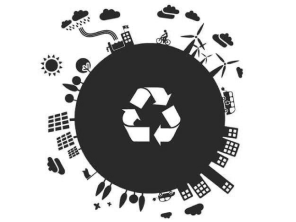
Sustainable Practices
The conservation, protection and Amazon care are essential both for the future of the plane and quality of life of it's population. It's not just the biggest biome in Brazil, but also surpass the biodiversity of any other tropical forest in the world. According to informations provided by the Ministry of the Environment, there are more than 2.500 species of trees and 30 thousands species of plants in the Amazon area. Furthermore, the Amazon house a big variety of species of animals.

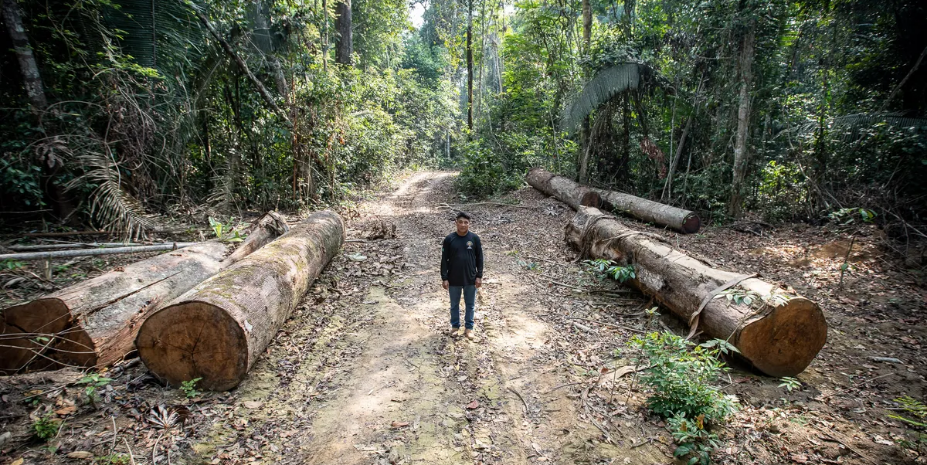
According to the Amazon Environmental Research Institute, the indigenous lands are the most preserved areas in the forest. Between 1985 and 2020, just 1,6% of the loss of the forest and Brazil's native vegetation occured on territories inhabited by native tradicional people. The data originated on an images analysis of satellites realized by the MapBiomas scientists team, with the assist of A.I. tecnics.